
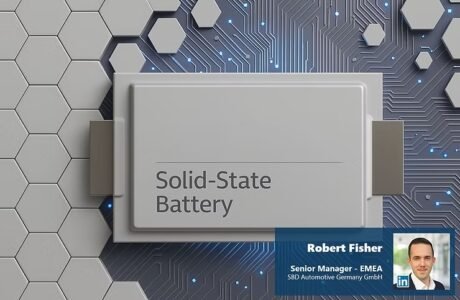
For years, solid-state batteries have been promoted as the next revolution in electric vehicles—offering longer range, faster charging, improved safety, and lighter designs. Yet despite the hype, they remain stuck in a familiar cycle: always “just a couple of years away” from mass production.
Automakers and tech companies continue to invest heavily in this technology, and for good reason. Solid-state batteries have the potential to outperform traditional lithium-ion batteries in nearly every category, from energy density to thermal safety. Some prototypes have already demonstrated impressive capabilities, including significantly extended driving ranges.
However, turning that promise into reality has proven far more difficult than expected. The biggest challenge lies in scaling production. Developing a stable and efficient solid electrolyte—a core component of these batteries—remains a complex technical hurdle. Even when solutions work in the lab, replicating them reliably and affordably at industrial scale is another challenge entirely.
Cost is another major barrier. Current solid-state designs rely on expensive materials and processes, making them impractical for mass-market vehicles in the near term. As a result, early adoption is expected to be limited to high-end or performance vehicles where higher prices are more acceptable.
Despite these obstacles, progress is being made. Companies are achieving incremental milestones, and prototypes are moving closer to real-world applications. Still, industry experts caution that the transition will be gradual rather than sudden. In fact, solid-state batteries may remain confined to niche or premium segments well into the next decade, with broader adoption likely unfolding slowly over time.
The reality is clear: solid-state batteries are not a myth—they work and show enormous potential. But the journey from breakthrough innovation to массовая, affordable production is long and complex. As one key takeaway suggests, physics and manufacturing don’t move at the pace of press releases.
In the end, the future of solid-state batteries is not a question of “if,” but “when.” And for now, that timeline continues to stretch just a little further than expected.
