
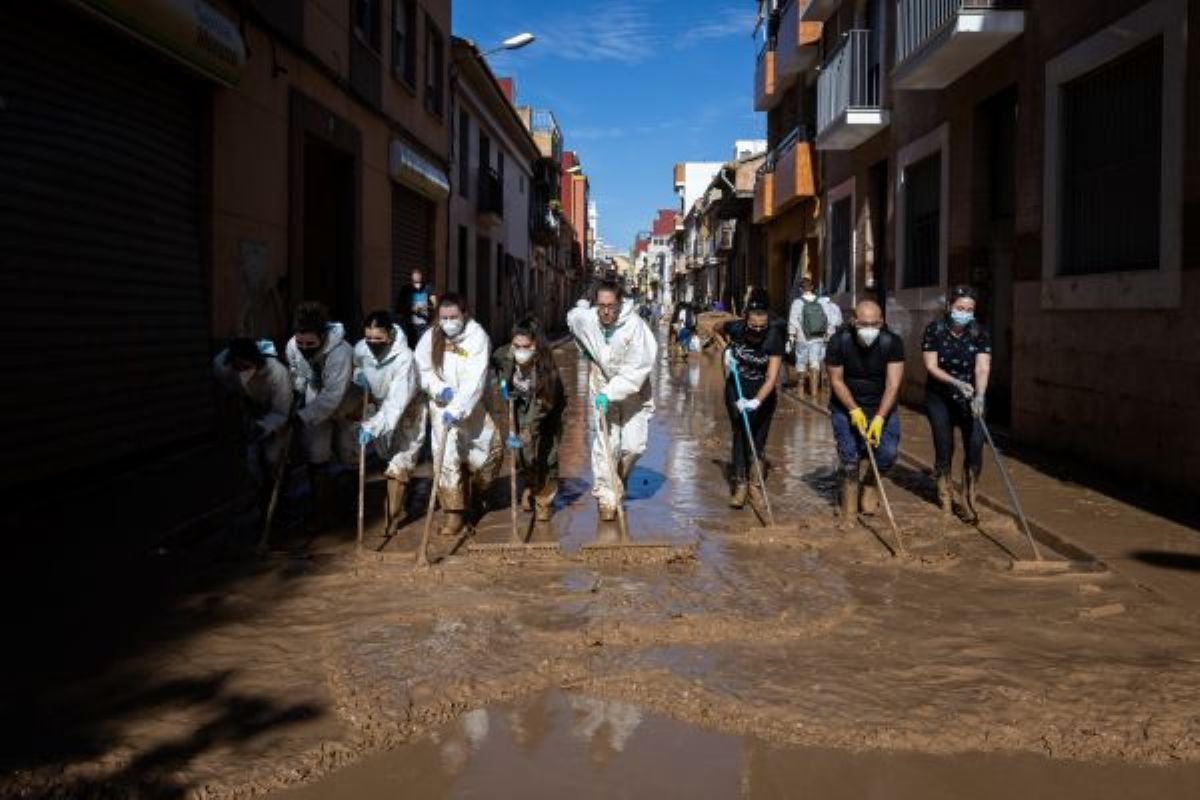
In a powerful demonstration of European solidarity, the European Union has approved a financial aid package of €1.6 billion to help Spain recover from the devastating floods that struck Valencia, Murcia, and parts of Andalusia earlier this year. The funding, announced by the European Commission in early October 2025, will support rebuilding efforts, economic relief for affected communities, and investments in climate-resilient infrastructure.
The decision comes at a time when extreme weather events are testing Europe’s ability to adapt to climate change, making this initiative not just a recovery plan, but a blueprint for resilience.
Background: The Cost of the Floods in Spain
The floods that hit southeastern Spain in the summer of 2025 were among the worst natural disasters in decades. Torrential rains caused rivers to overflow, destroying homes, farmland, and critical transport links.
According to Spain’s Civil Protection Agency, more than 150,000 people were directly affected, 2,000 small businesses were forced to close temporarily, and infrastructure damages exceeded €3 billion.
Local authorities declared several regions disaster zones, urging the central government and Brussels for emergency financial support. The EU’s response—swift and significant—marks one of the largest single recovery packages granted to a member state under the EU Solidarity Fund (EUSF).
“Spain’s recovery is Europe’s recovery. These funds will rebuild communities, protect livelihoods, and strengthen climate resilience,”
— Paolo Gentiloni, European Commissioner for Economy.
Where the €1.6 Billion Will Go
The aid package will be distributed through multiple programs coordinated between Madrid and Brussels. According to the Ministry for Ecological Transition, the funds will be split into three main areas:
-
Infrastructure Reconstruction (€800 million)
Roads, bridges, and railways across Valencia and Murcia suffered massive damage. Nearly half of the funds will go toward rebuilding transportation networks, improving drainage systems, and reinforcing flood defenses. -
Support for Businesses and Agriculture (€500 million)
Thousands of small businesses—particularly in tourism, agriculture, and manufacturing—faced severe losses. The EU funding will provide grants and low-interest loans to restore operations, protect jobs, and modernize production with green technology. -
Climate Adaptation and Prevention (€300 million)
The remaining portion will invest in sustainable water management, early warning systems, and infrastructure to prevent future disasters. This includes smart sensors, digital flood mapping, and improved river monitoring networks.
These measures are not only about rebuilding what was lost, but about redefining how Spain manages future climate risks.
Why This Matters: Climate Change and Economic Impact
The Spanish economy has long relied on agriculture, tourism, and coastal development—industries highly vulnerable to extreme weather. Climate scientists warn that floods, droughts, and heatwaves will become increasingly frequent, costing billions each year if preventive measures are not taken.
The EU’s financial intervention serves two crucial purposes:
-
Economic stability: By injecting liquidity into affected regions, it helps Spain avoid a sharp regional recession.
-
Climate transformation: It encourages local governments to adopt sustainable, low-carbon strategies aligned with the European Green Deal.
Economist Laura Hidalgo from IE Business School notes:
“This aid is not charity—it’s a strategic investment. Every euro spent on climate adaptation today saves five euros in future disaster losses.”
Regional Reactions: Valencia at the Center of Recovery
In Valencia, the region most severely affected, residents have expressed both relief and urgency. Mayors from several municipalities welcomed the funding but called for faster bureaucratic procedures to ensure the money reaches local projects on time.
The Valencian Federation of Municipalities and Provinces announced it would coordinate with Madrid to prioritize infrastructure repairs and business subsidies. Farmers’ unions, however, warned that compensation for crop loss must be distributed fairly and promptly, as many rural economies remain on the brink.
Meanwhile, environmental organizations like Ecologistas en Acción have urged the government to use this opportunity to implement nature-based solutions, such as restoring wetlands and river basins, instead of relying solely on concrete barriers.
A Broader European Perspective
Spain’s floods are not an isolated case. In 2025 alone, Italy, Slovenia, and Germany also experienced severe weather events, pushing the EU to expand its Solidarity Fund and integrate climate adaptation into all regional policies.
The European Parliament is now debating the creation of a permanent Climate Disaster Fund, which would provide automatic financial assistance to member states affected by natural catastrophes.
If approved, this could revolutionize how the EU collectively responds to environmental crises.
“The floods in Spain show why Europe needs stronger, faster solidarity mechanisms,”
said Roberta Metsola, President of the European Parliament.
“No country can face the climate crisis alone.”
Challenges Ahead: From Funding to Implementation
While the €1.6 billion commitment has been widely celebrated, the implementation phase remains a challenge. Spain has faced criticism in the past for delays in distributing EU funds, particularly during post-COVID recovery efforts.
The government has pledged greater transparency through a new public monitoring platform that tracks every project financed under the recovery plan. This digital tool will allow citizens to see where and how funds are used—a move praised by both watchdog organizations and EU auditors.
Still, logistical and political tensions could emerge between national and regional administrations, especially over project priorities. Ensuring coordination will be key to avoiding the inefficiencies that plagued previous recovery programs.
Long-Term Vision: Building a Resilient Spain
Beyond immediate reconstruction, Spain’s flood recovery initiative could mark a turning point in Europe’s climate strategy. If successful, it will demonstrate how solidarity funding can foster innovation, sustainability, and community resilience across borders.
Some experts argue that Spain could become a model for climate-resilient infrastructure, leveraging its experience to lead future EU programs in disaster prevention and adaptation technologies.
As the country rebuilds, the hope is not just to restore what was destroyed—but to create something stronger, smarter, and greener.
