
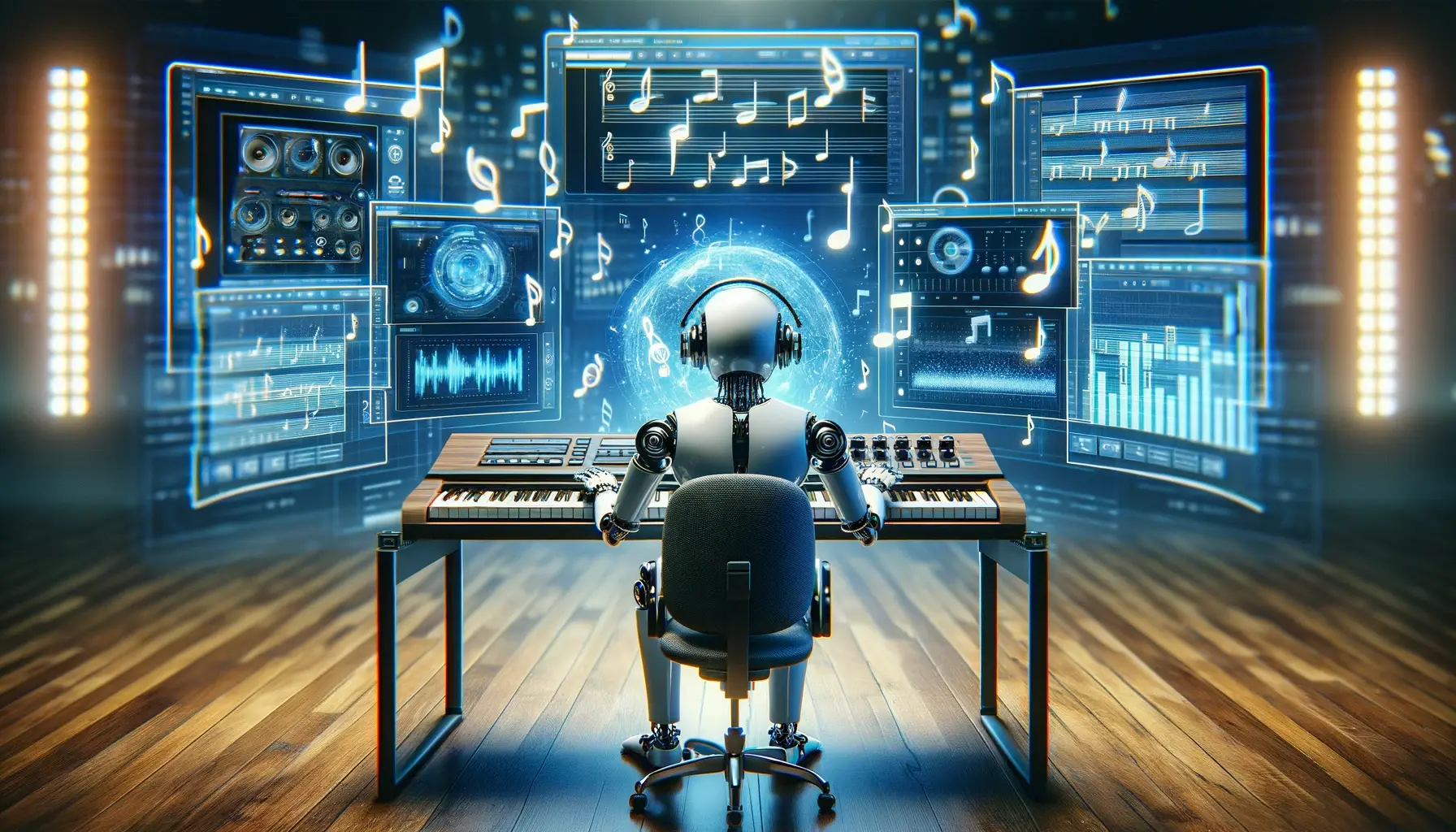
From scripts written by algorithms, to music composed by generative models, to visual effects created without human intervention, AI is reshaping every stage of the creative production pipeline.
And this isn’t about future predictions — it’s already happening in 2025.
Recent studies published on arXiv, especially those focused on AI for Creative Industries, show how the combination of generative models, deep learning, and multimodal systems is creating entirely new ways of producing entertainment.
Creativity is no longer exclusively human — it’s now hybrid.
AI-Generated Scripts: From First Draft to Full Scenes
The advances in AI text generation have been so significant that it’s now widely used to:
✔ Draft scripts
Platforms powered by Large Language Models (LLMs) can generate narrative structures, dialogues, and even full sequences within minutes. Screenwriters use these tools as:
-
Creative assistants
-
Idea generators
-
Systems to accelerate repetitive processes
Studies on arXiv highlight how AI can analyze thousands of scripts, learn narrative patterns, and produce coherent plots with strong dramatic arcs.
✔ Scene optimization
AI can also analyze:
-
Narrative pacing
-
Dramatic tension
-
Audience reactions
This allows creators to refine dialogues and scenes before filming, saving both time and budget.
Machine-Generated Music: Compositions in Seconds
Music is one of the fields where AI has delivered the most surprising results.
✔ Automatic composition
Models such as:
-
Audio-based Transformers
-
Generative Audio Models
-
Diffusion models adapted for music
can now create original musical pieces based on genre, mood, or specific references.
Today, streaming platforms, video games, and advertising already use AI-generated music for:
-
Background tracks
-
Experimental soundtracks
-
Alternative versions of songs
✔ Industry advantages
-
Rapid creation of tracks without expensive licensing
-
Real-time adaptation to interactive scenes (gaming)
-
Personalized compositions for different audiences
arXiv has documented how AI can master complex musical structures — from classical harmonies to modern urban beats.
AI-Generated Visuals: Faster and Cheaper Special Effects
Visual production is one of the sectors most impacted by generative AI.
✔ Creation of virtual worlds and environments
3D and video generation models now allow creators to:
-
Generate environments from text prompts
-
Simulate cinematic lighting
-
Produce full scenes without physical sets
This drastically reduces filming costs and unlocks unlimited creative possibilities.
✔ Deepfakes and digital actors
Although controversial, this technology is already used to:
-
De-age actors
-
Bring deceased artists back to the screen
-
Create automatic lip-synced dubbing
-
Produce hyper-realistic marketing campaigns
Research on arXiv shows the rapid evolution of Video Diffusion Models, which can now generate high-quality clips suitable for professional productions.
AI as Co-Producer: A New Creative Paradigm
AI is not replacing creators — it’s amplifying their capabilities.
How creative workflows are changing:
-
Screenwriters iterate far faster.
-
Musicians explore combinations impossible in the physical world.
-
Directors visualize scenes without building sets.
-
Post-production teams eliminate tedious manual work.
AI becomes an invisible collaborator that accelerates processes and opens new artistic paths.
Impact on Streaming: Hyper-Personalized Content
Streaming services are already experimenting with:
-
Emotion-based content recommendations
-
Automatically generated trailers
-
Mini-episodes customized for each viewer
-
Real-time subtitles and dubbing
This means each user can enjoy a unique, dynamic, personalized experience.
Ethical & Creative Challenges: The Other Side of the Revolution
Despite the unprecedented innovation, AI raises important questions:
-
Who is the true author of AI-assisted content?
-
How do we protect the rights of actors and musicians?
-
What risks come with deepfake generation?
-
Could AI flood the industry with “too perfect” content?
Recent research suggests the urgent need for legal and ethical frameworks that evolve as quickly as the technology itself.
The Future of Entertainment: Humans + AI
The next decade will be defined by productions where:
-
Pre-production is almost entirely AI-generated.
-
Creatives focus more on vision and less on mechanical tasks.
-
New hybrid genres and formats emerge.
-
Audiences participate in creation through interactive tools.
AI isn’t here to replace — it’s here to expand human creativity into territories once unreachable.
Artificial intelligence is reinventing entertainment at its core: scripts, music, visuals, editing, and personalized experiences. What began as experimental tools is now part of the creative process for studios, streaming platforms, and independent artists.
The advancements documented on arXiv and other research sources demonstrate that we are entering an era where creativity is a shared effort between humans and machines.
